




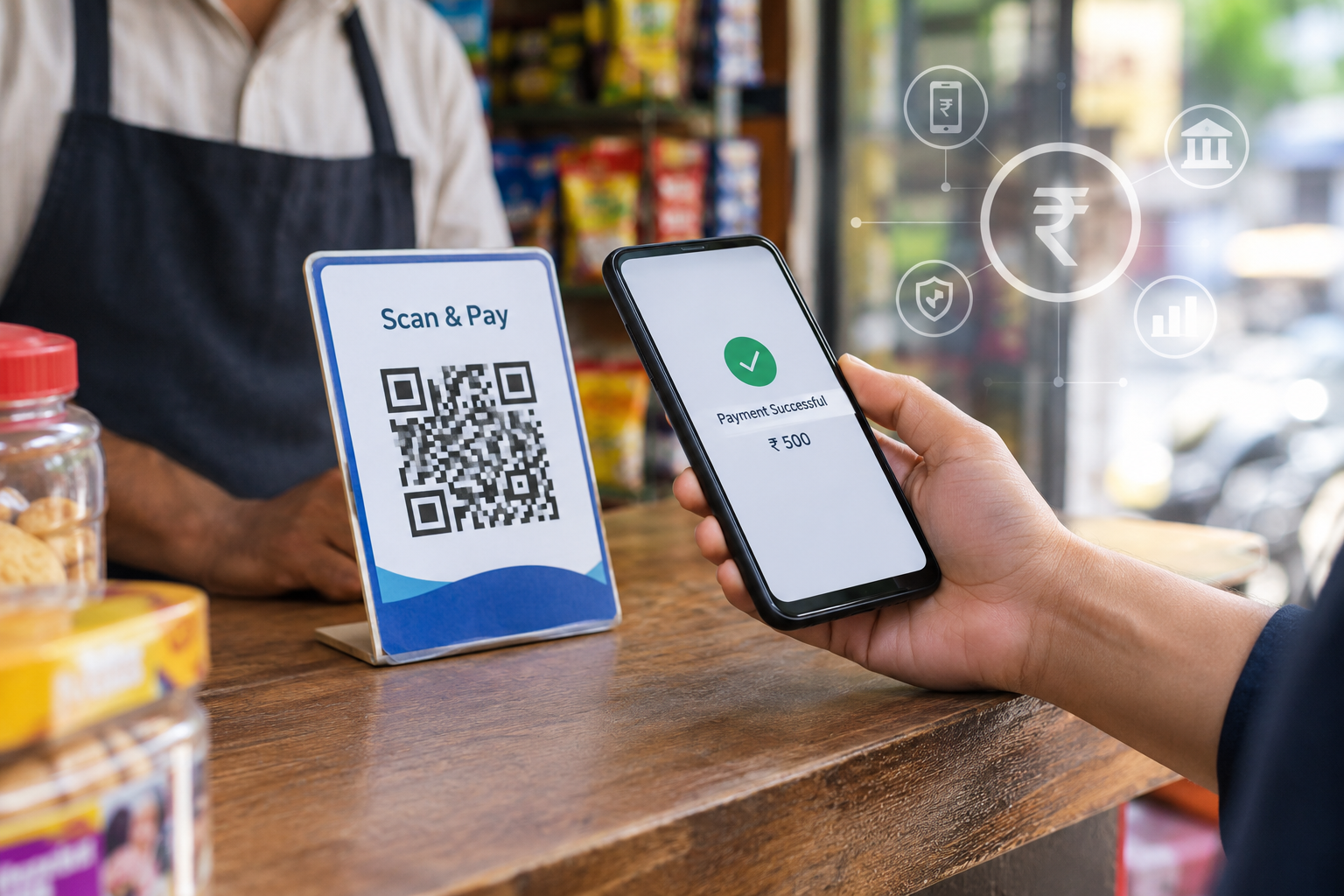
India’s Unified Payments Interface (UPI) is set to introduce a new merchant fee on certain higher-value transactions, according to a BBC report. The change is aimed at creating a more sustainable revenue model for the digital payments ecosystem while keeping most everyday UPI transactions free for consumers.
The proposed 0.4% UPI merchant fee will apply to eligible transactions above ₹2,000, with the charge being paid by businesses rather than customers. The development is significant for India, where UPI has become one of the country’s most widely used digital payment systems.
Who Will Pay the New UPI Merchant Fee?
Under the reported framework, the new charge will be imposed on merchants for qualifying transactions. Consumers making payments through UPI will not directly pay the fee.
The fee will be capped at ₹300 for larger transactions, including payments of ₹75,000 or more. Certain categories, including railway and insurance payments, will reportedly have a flat ₹5 charge.
The government has stressed that the merchant fee is not a tax. Instead, it is being presented as a mechanism to support the long-term operation, development and infrastructure of the UPI ecosystem.
For consumers, most routine UPI payments are expected to remain free. Person-to-person transfers and smaller merchant payments will continue without the new charge, while certain rural QR-code transactions are also excluded from the reported fee structure.
Why Is India Introducing a UPI Merchant Charge?
UPI has expanded rapidly since its launch, becoming an important part of India’s digital economy. Its widespread use has also created significant costs associated with maintaining payment infrastructure and supporting transactions.
The introduction of a merchant fee could provide payment companies and the wider ecosystem with an additional source of revenue. However, the change could also affect businesses that depend heavily on digital payments, particularly merchants handling larger-value transactions.
The move comes as India attempts to balance two objectives: keeping digital payments accessible while ensuring that the infrastructure supporting UPI remains financially sustainable.
What Could It Mean For UPI Users?
For most consumers, the immediate impact is expected to be limited because the reported charge is aimed at merchants rather than customers. Everyday low-value UPI payments are expected to remain free.
However, the change could have wider implications if businesses decide to adjust prices or encourage customers to use cash for transactions that attract the merchant fee. Concerns have also been raised about whether additional costs could make some merchants less willing to rely entirely on digital payments.
UPI has played a major role in India’s transition towards a digital payments economy. The latest change therefore marks an important development in how the country’s flagship instant-payment system could be funded in the future.
Also Read : https://theglobalcurrent.com/subhash-chandra-breaks-silence-on-nclt-case-debt-claims-and-his-future-plans/