




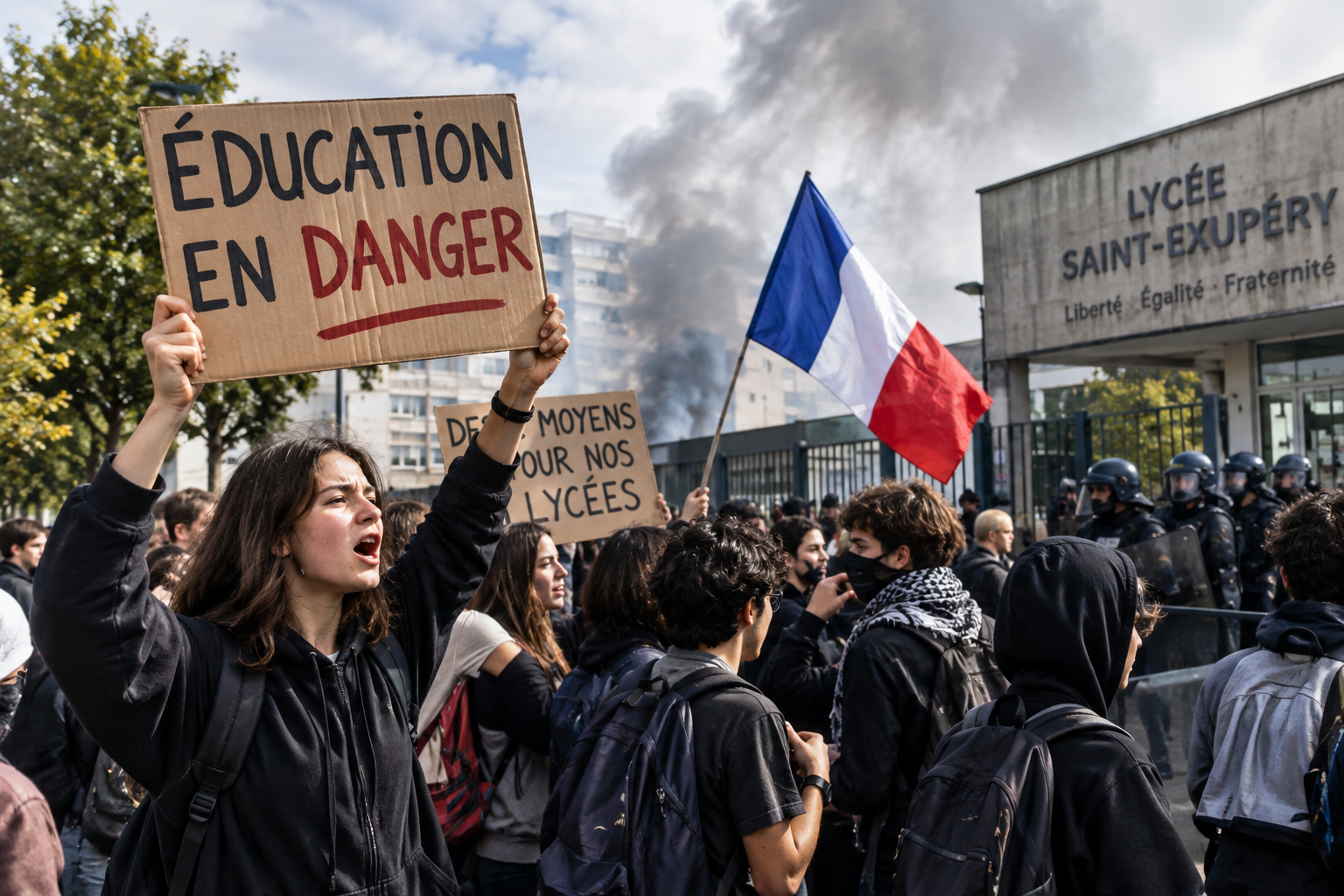
Student protests have spread across France, with teenagers blocking school entrances and clashing with security forces over concerns about education, staffing and school conditions. More than 5,000 people have been arrested since Monday, according to France’s interior ministry, while hundreds of educational establishments have been affected.
What Are French Students Protesting About?
The protests are largely taking place at lycees, schools attended by students aged around 15 to 18. Students have raised several concerns, including teacher shortages, poor classroom conditions, overcrowded schools and long school hours.
Some students say their school day can stretch from around 8 am to 6 pm. The concerns are particularly significant in low-income neighbourhoods, where students and experts say educational inequalities remain a major issue.
How Did The Protests Begin?
The movement began on September 17 at Saint-Exupery High School in Creteil, a suburb of Paris. Students initially rallied in support of teachers who were protesting over staff shortages and a lack of resources.
The movement subsequently spread to other parts of France. At the school where the protests began, authorities later agreed to provide additional staff, including a deputy principal and a nurse.
How Is Social Media Fueling The Protests?
Social media has played an important role in spreading the movement. Students have recorded clashes, burning bins and police using tear gas, with videos circulating widely on platforms including TikTok.
The rapid spread of these images has helped students share their version of events and has contributed to the protests gaining visibility beyond individual schools.
Why Is Social Inequality A Major Issue?
Although France provides access to secondary education, there are significant differences between schools. The education system includes vocational institutions as well as highly selective schools, with differences in the backgrounds of students attending them.
Sociologists have pointed to inequalities between students and schools, particularly affecting young people from less affluent communities.
Why Has Politics Entered The Protests?
The demonstrations have also become a political issue, coming months before France’s presidential election. The government has accused the hard-left France Unbowed party, or LFI, of helping drive the movement.
LFI officials have rejected the allegation. Jean-Luc Melenchon has expressed support for the protests while calling for non-violent action.
What Has Been The Police Response?
The protests have involved school blockades, burning objects and clashes with police. Security forces have used tear gas and other methods to disperse protesters in some locations.
In one incident in Tours, a young man was seriously injured during clashes and reportedly lost the use of his right eye, according to the city’s prosecutor. Videos showing alleged excessive police conduct have also circulated online, while police officers have themselves been attacked during some protests.
With student unions calling for further demonstrations, the protests remain a major challenge for French authorities and have widened the debate over education, inequality and policing in the country.
Also Read : https://theglobalcurrent.com/putins-united-russia-wins-big-in-russia-election-amid-ukraine-attacks/