




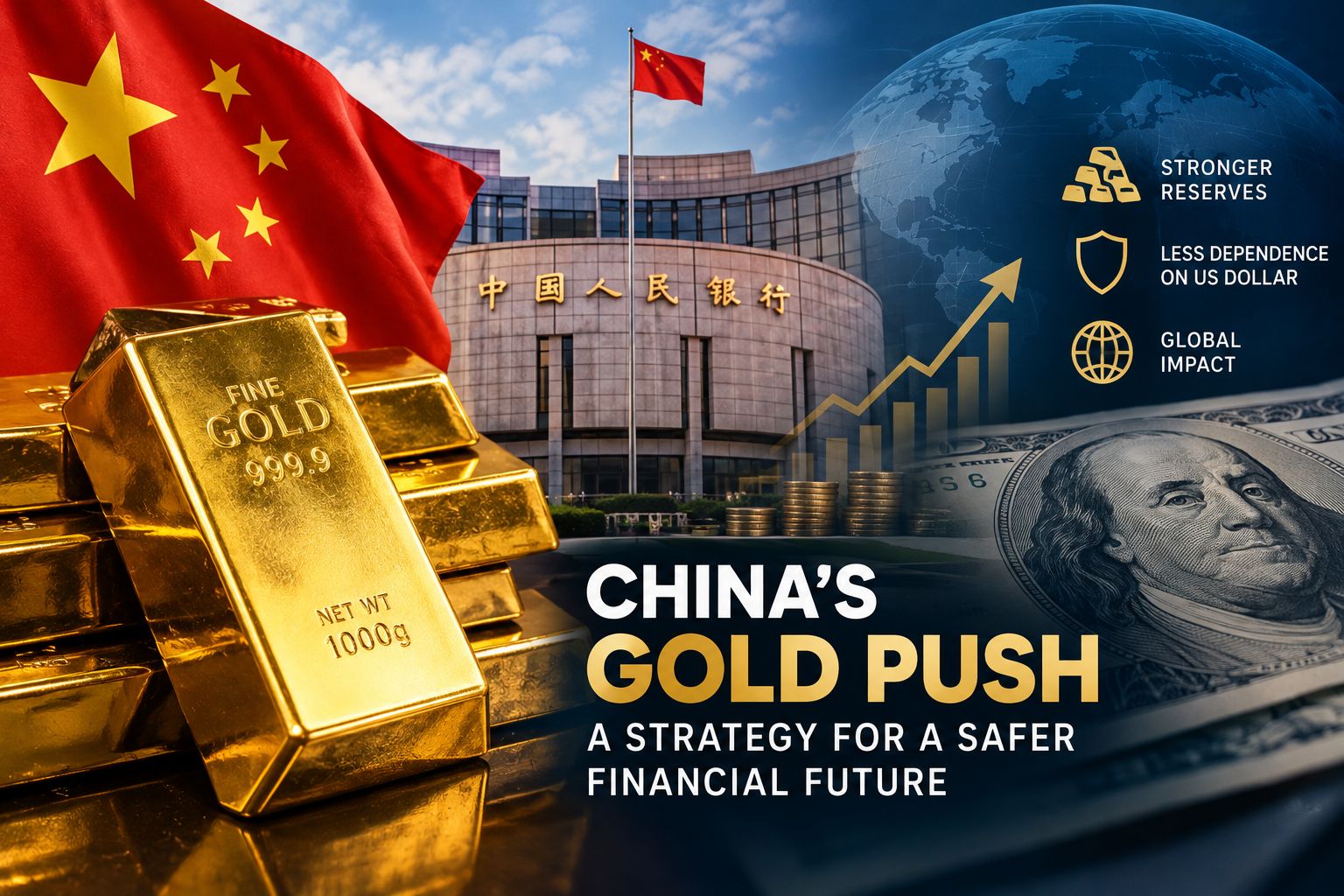
China is increasing its gold reserves as it looks to reduce its dependence on the US dollar and protect itself from global financial risks. Its central bank added 23 tonnes of gold in September 2026, taking its reported holdings to around 2,410 tonnes. The move reflects growing concerns about economic uncertainty, geopolitical tensions and the safety of overseas assets.
China is buying more gold as it seeks greater control over its financial future. The country wants to spread its reserves across different assets rather than rely too heavily on the US dollar.
The move comes at a time of rising geopolitical tensions and concerns about government debt. Gold offers China another way to protect its wealth during periods of uncertainty.
China’s central bank has continued buying gold for 23 consecutive months. According to the World Gold Council, its September purchase marked the largest monthly addition since October 2023.
But the buying is not limited to the government. Chinese households are also turning to gold as they look for ways to protect their savings.
Why Is China Building Its Gold Reserves?
One major reason is China’s effort to reduce its exposure to US financial assets.
China holds large reserves in foreign currencies and government bonds. A significant share of global trade and financial transactions also depends on the US dollar.
However, holding assets overseas can create risks during a political or economic dispute. Governments may face restrictions on accessing foreign assets if tensions escalate.
China has seen how such restrictions can affect another country. In 2022, Western governments froze roughly $300 billion in Russian central bank assets after Russia invaded Ukraine.
The move highlighted a risk for countries that hold large amounts of wealth abroad. If relations with another major power deteriorate, access to some overseas assets could become difficult.
Gold offers a different option. A country can store physical gold within its own borders and reduce its reliance on assets controlled by another government.
Analysts see China’s buying as a way to manage financial risks. However, the move does not automatically mean Beijing plans to abandon the US dollar.
How Much Gold Has China Bought?
China’s central bank added around 23 tonnes of gold in September 2026. This took its reported holdings to approximately 2,410 tonnes, according to the World Gold Council.
Gold now accounts for a larger share of China’s official reserves. It represented about 8.5% of those reserves at the end of September, compared with 5.5% at the end of 2024.
The wider trend also shows strong interest from private buyers.
The China Gold Association reported that purchases of gold bars and coins rose 28.4% in the first half of 2026 compared with the same period in 2025.
However, China’s gold market tells two different stories. The central bank continues to add gold to its reserves, while demand for gold jewellery remains under pressure.
This difference matters because government purchases and household buying have different goals. Beijing wants to manage national financial risks, while ordinary investors may want to protect their personal savings.
Why Are Chinese Households Turning to Gold?
China’s property market has struggled with falling prices, heavy debt and weak confidence. These problems have made some households more cautious about where they put their money.
The country’s stock market has also faced uncertainty. As a result, some investors have looked for other ways to protect their savings.
Gold often attracts buyers during periods of financial stress. Unlike shares, it does not depend on a company’s performance. It can also help investors spread risk across different assets.
However, gold prices can rise and fall sharply. The metal does not pay interest or dividends, and investors can lose money if prices fall after they buy.
For households, therefore, gold offers a possible store of value, but it does not guarantee a profit.
Does China’s Gold Buying Threaten the US Dollar?
China’s growing gold reserves have raised questions about the dollar’s long-term role in the global economy.
The US dollar remains the world’s leading reserve currency. Governments, banks and businesses use it widely for international trade, payments and financial transactions.
Gold cannot replace all these functions. Countries still need currencies they can use to settle payments, trade with other nations and respond to financial emergencies.
However, China’s strategy could influence global markets over time. If more central banks shift part of their reserves into gold, they may buy fewer US government bonds than they otherwise would.
That could affect demand for US debt. The actual impact would depend on how many countries follow the same path and how quickly they change their reserve policies.
For now, the trend looks more like gradual diversification than a sudden move away from the dollar.
Is China the Only Country Buying More Gold?
No. Several central banks have increased their gold holdings as they seek to spread financial risk.
Poland has emerged as a major buyer. According to the World Gold Council, its central bank purchased 31 tonnes of gold in the first quarter of 2026 and another eight tonnes in July.
Other central banks have also added gold to their reserves. Their reasons include financial stability, protection against uncertainty and a desire to hold a wider mix of assets.
Still, the size of a country’s gold reserves does not tell the whole story. Recent purchases, existing holdings and the total value of official reserves all matter.
China’s buying stands out because it has continued for nearly two years. Yet its reported holdings remain far below those of the United States, which holds about 8,133 tonnes of gold.
What China’s Gold Strategy Means for the World
China’s gold purchases offer a glimpse into how governments are responding to a changing global economy.
The strategy reflects concerns about geopolitical conflict, financial sanctions and the risks of holding too much wealth in one type of asset.
It also shows why central banks continue to view gold as part of their long-term financial plans.
However, gold alone cannot replace foreign currencies or solve every economic challenge. Countries still need access to liquid assets to support trade and meet international payments.
The key question is whether other central banks will continue to increase their gold holdings. If they do, gold could play a larger role in global reserves over the coming years.
For now, China’s strategy signals a push to spread risk and strengthen financial security. It does not yet mark the end of the US dollar’s global dominance.
Also Read : https://theglobalcurrent.com/how-a-%e2%82%b91000-extra-sip-can-add-lakhs-to-your-retirement-corpus/